ServicesReverse Osmosis
Reverse Osmosis in Glendale, Sized to Your Kitchen
A reverse osmosis system pushes your tap water through a semipermeable membrane and sends the dissolved minerals and salts to the drain. We test your water first, size the system to what we find, and plan filter changes so you know the upkeep before it is installed.
What Reverse Osmosis Does and When It Fits
Most carbon filters improve taste and odor but leave dissolved solids in the water. A reverse osmosis membrane is different. Its pores are small enough to hold back calcium, magnesium, sodium, nitrates and many metals, so the water at your drinking faucet tastes clean instead of flat or salty. Water across the Phoenix area is known for heavy mineral content, which is why spotted glasses and a chalky aftertaste are so common.
RO is a point-of-use system. It sits under one sink and treats the water you drink and cook with, not the water for showers or laundry. If your concern is the whole house, our whole-home filtration or water softeners pages cover that side. Many homes pair the two, and planning both at once avoids reworking the plumbing later.
What Your Reverse Osmosis Install Includes
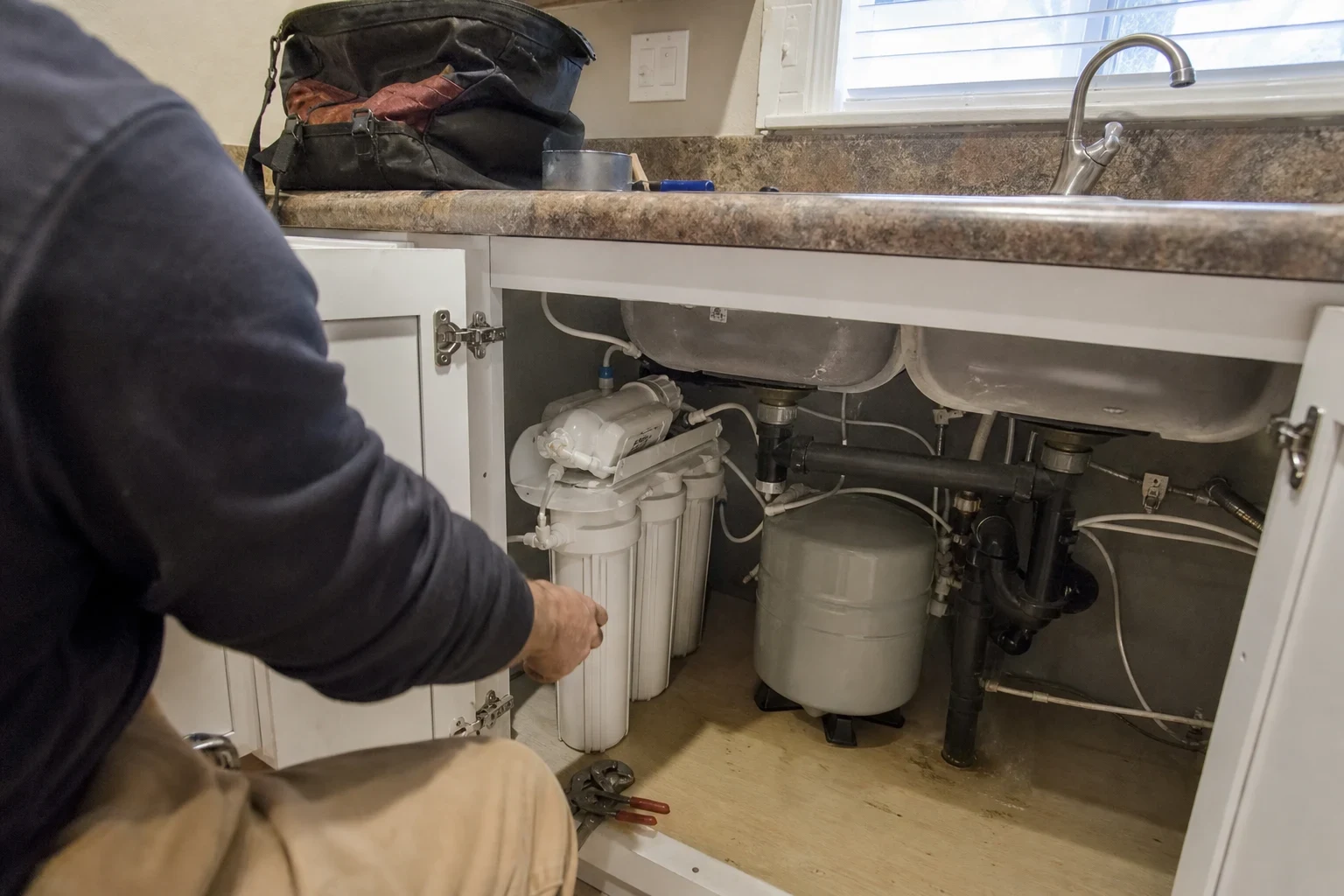
- Sediment and carbon prefilters
- A sediment cartridge catches sand and rust flakes, then a carbon block removes chlorine. Both protect the membrane, because chlorine degrades the thin-film composite material it is made from.
- The RO membrane
- This is the stage that removes dissolved solids. We choose its output rating based on how much water your household drinks and cooks with each day.
- Storage tank and post filter
- The membrane works slowly, so a pressurized tank holds finished water for when you open the faucet. A final carbon polishing filter sits after the tank to catch any taste picked up while the water was stored.
- Dedicated faucet, drain saddle and air gap
- We mount a separate faucet on your sink or counter and connect the reject line to the drain with a saddle clamp. Where it is required, an air gap faucet keeps drain water from ever backing up toward the system.
- Optional refrigerator line
- If your fridge has an ice maker or dispenser, we can run a line from the RO system so it gets the same water. Tell us on the phone and we will plan the route.
Signs an RO System Is Worth Planning For
Jugs of drinking water on every grocery run
Hauling home jugs for drinking and coffee costs money every month and fills a corner of the pantry. An RO faucet puts filtered water at your sink instead.
White crust on kettles and coffee makers
Scale inside a kettle is dissolved minerals left behind as water boils off. Removing them before they reach the appliance means less descaling.
Your tap water tastes salty or flat
High total dissolved solids give water a mineral or slightly salty taste. A membrane removes most of what causes it.
Older plumbing in your home
Water can pick up metals from old pipes and fittings on its way to the tap. A test shows whether that is happening, and a membrane at your drinking faucet strips out most dissolved metals before you fill a glass.
Your current RO system is aging
Slow flow, a tank that runs dry, or a constantly running drain line usually point to a worn membrane or a failed check valve. We look at it first and tell you whether repair makes sense.
From Test to Running RO System
- 1
A free test at your tap
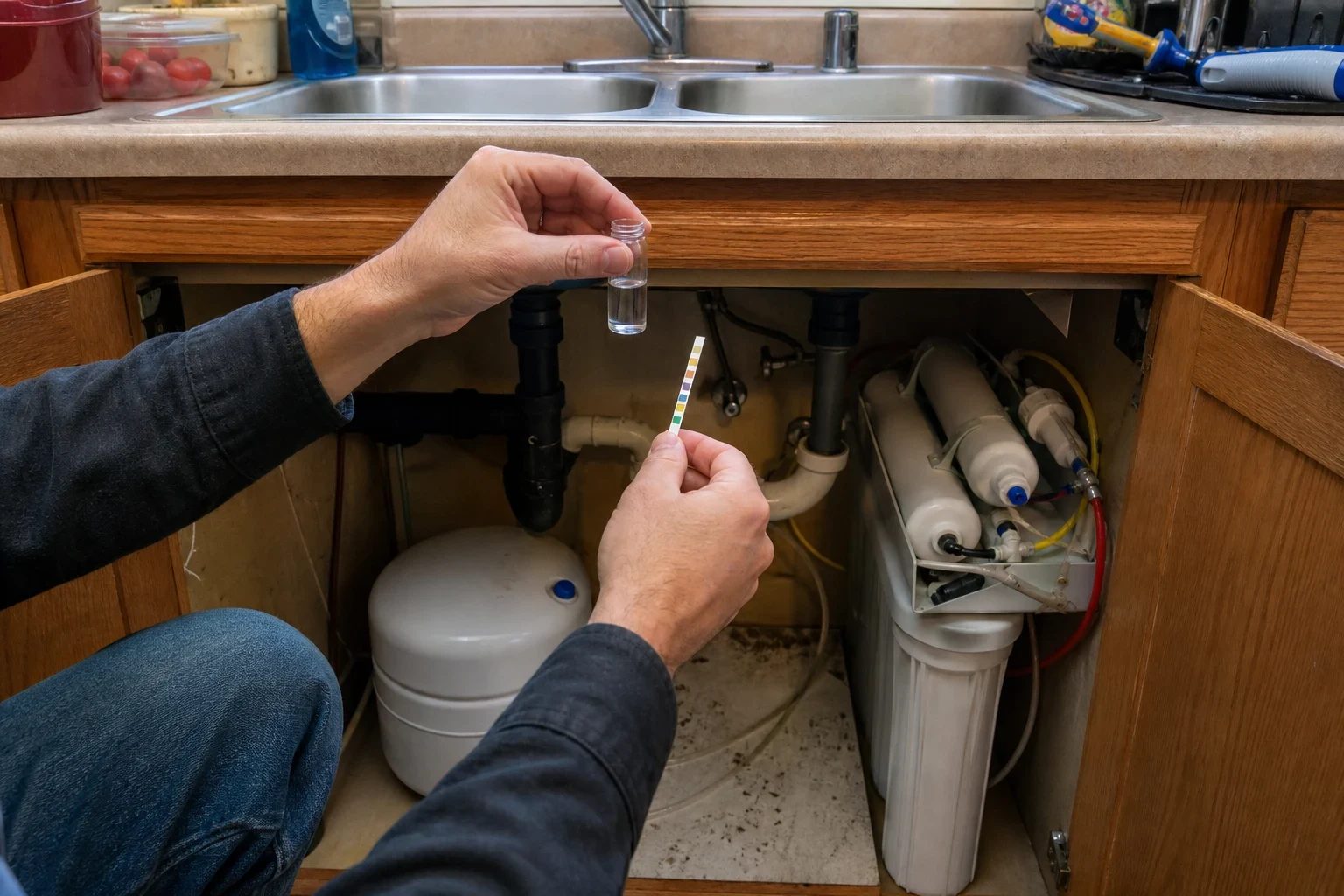
We read hardness, chlorine and total dissolved solids at your faucet, free and with zero obligation. Those readings show whether RO fits or another system would do the job better.
- 2
Your stages and price by phone
Using your results, we tell you which stages we'd recommend and the reason for each, then quote installed system pricing over the phone. Install comes included with water treatment systems, so that figure covers parts and labor.
- 3
Work inside the sink cabinet
The plumber turns off the cold line, adds a feed valve, hangs the filter housings, uses an open hole or drills one for the faucet, and hooks up the drain line. Nearly everything happens inside the cabinet, and it's cleaned up before the plumber leaves.
- 4
Flushing, leak check and a tour
We drain the first tank to clear carbon dust and the new membrane's preservative. Then we check every fitting for leaks and show you each cartridge and about when it needs replacing.
What Moves the Price of a Reverse Osmosis System
The price depends on the system you need and the space it goes into. Because we test first, we can quote the right number of stages instead of the largest unit on the shelf. You get installed pricing by phone before any work is scheduled.
- Hardness and dissolved solids
- Very hard water scales a membrane faster. If your test shows high hardness, we may recommend extra prefiltration or a softener upstream so the membrane lasts longer and replacement costs stay predictable.
- Number of stages and extras
- A remineralization stage, a permeate pump to cut waste water, or a larger tank each change the price. We explain what each one does so you can decide which are worth it.
- Cabinet space and faucet mounting
- A tight sink cabinet, a garbage disposal in the way or a stone countertop that needs a new hole drilled can add time to the install.
- Extra water lines
- Feeding your ice maker or adding a bar sink faucet means more tubing and connectors. The longer the route from the sink cabinet, the more labor it takes.
Common Reverse Osmosis Questions
Something not covered here? (480) 808-5114
Does reverse osmosis send water down the drain?
It does, to a degree. Water has to keep moving across the membrane to flush away the minerals it rejects. The amount depends on your pressure and the unit's design, and a permeate pump cuts it considerably. We cover that tradeoff when we quote.
How often are filters replaced?
Prefilters and the post filter get swapped on a routine schedule, while the membrane lasts much longer. Your actual timing depends on your water and your usage, one reason the test comes first. At the walk-through you get a schedule to budget around.
Will RO strip out minerals my body needs?
It takes out most dissolved minerals, calcium and magnesium included. Most of those minerals in your diet come from food, not water. If you like some mineral taste, a remineralization cartridge puts a little back after the membrane.
Will my kitchen faucet lose pressure?
No. The RO water comes from its own faucet, so your regular kitchen faucet flows as it always has. The RO faucet runs slower on purpose since it draws from the storage tank.
Is the install under warranty?
Yes, a 5-year warranty on installation and labor. If a fitting, valve or tubing joint we installed starts dripping in that time, call and we'll come back to check it under that coverage.
Who does the actual install?
We take care of the water test, choosing the system and pricing it. Our partner plumbers do the plumbing in your home: they mount the housings, connect to your cold supply and drain, and check each fitting before leaving. You have one number to call before and after.
Plan Your Drinking Water Before the Next Grocery Run
Start with a free water test so the system matches what is actually in your tap. Our 3 five-star Google reviews come from homeowners who started the same way.