ServicesWater Softeners
Water Softener Installation in Glendale, Sized From Your Test
A water softener trades the calcium and magnesium in your water for sodium or potassium before it reaches your fixtures. We size each system from a free water test, so you can plan and budget the install before scale takes out a water heater element or a dishwasher pump.
What a Softener Does and When It Makes Sense
Hardness is dissolved rock. Calcium and magnesium stay in solution until water is heated or evaporates, and then they drop out as scale. That scale coats water heater tanks, narrows the passages in tankless heat exchangers, and leaves the white crust you scrub off faucets and shower glass.
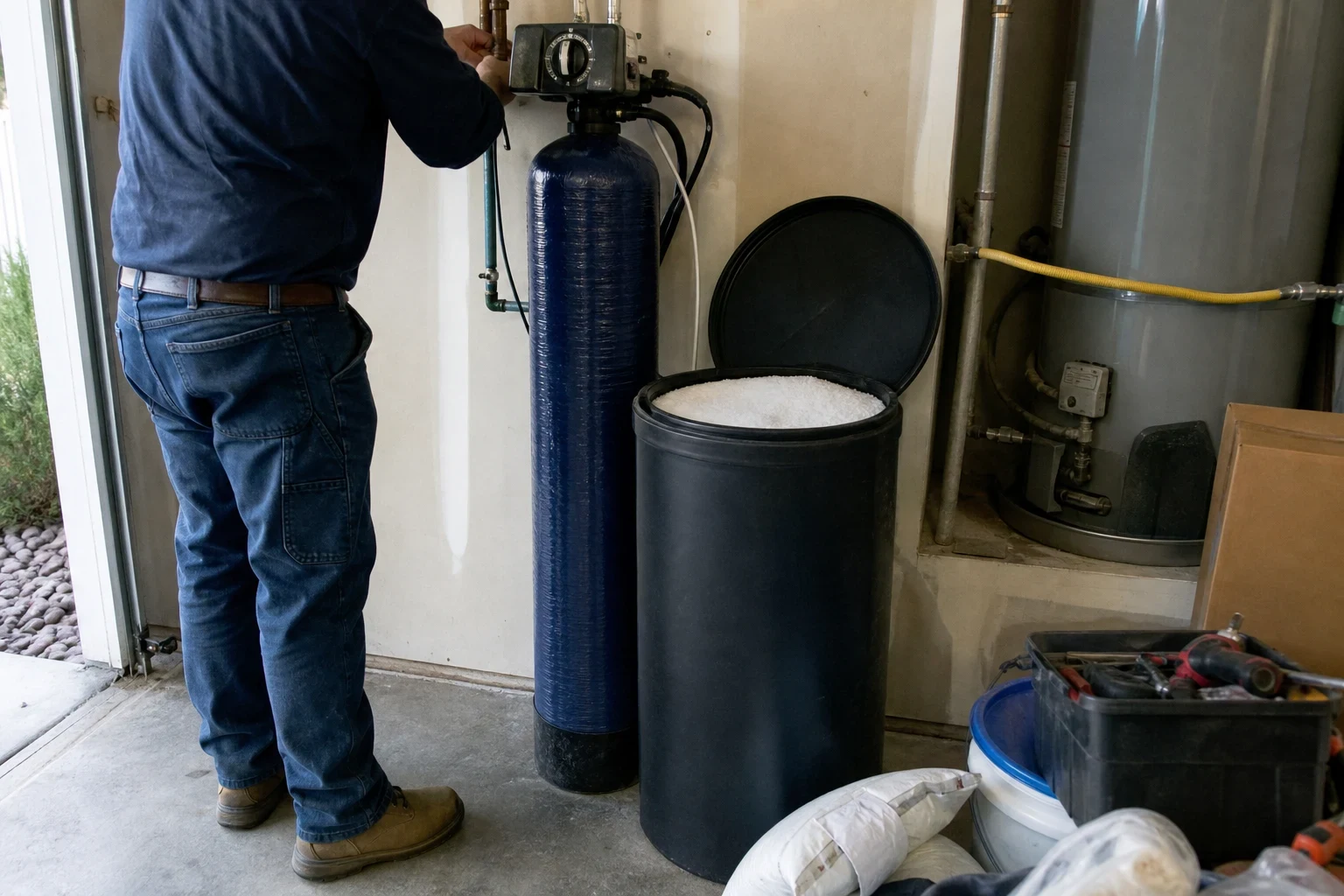
Inside the softener's mineral tank sits a bed of small polystyrene resin beads, each one charged with sodium or potassium. Hard water flows down through that bed, the beads trade their ions for the calcium and magnesium, and soft water exits the bottom. Once the bed is loaded, the control valve pulls brine from the salt tank, rinses the captured minerals to the drain, and recharges the beads.
Hard water is common across the Phoenix area, but readings still vary from one home to the next. That is why we test before we size anything. A free test gives you the actual grains per gallon, which sets the resin capacity, the salt use, and the budget you are planning around.
What Comes With Your Softener Install
- A tank sized to your reading
- Grain capacity is set by your measured hardness and how much water your household runs each day. Too small a tank recharges constantly and goes through salt. Too large a tank leaves resin idle, and water starts cutting channels through it.
- A demand-metered valve
- Our recommendation is a demand-initiated valve. A small turbine counts the gallons flowing through, and the system recharges only once the resin has spent most of its capacity. A timer valve recharges on fixed days, even while you're on vacation, using salt and water for nothing.
- Plumbing tie-in with a bypass
- We connect the softener at your existing loop or at the point where the main enters, and add a bypass so it can be shut out for service. Because install comes with the system, that plumbing is already in your quote.
- An air-gapped drain line
- Each recharge sends rinse water to the drain through an open air gap. That break in the line means drain water can never siphon back into the resin tank. The brine tank gets a separate overflow line as well.
- First run, settings and a soft-water check
- We fill the salt, enter your hardness and capacity in the valve, start the first recharge, and test water leaving the tank to make sure it's soft.
- A tidy site and a quick tour
- You'll learn where the bypass handle is, how to check the salt, and what a normal overnight recharge sounds like. We haul away the boxes and pipe scraps.
When Hardness Is Already Costing You
Scale on faucets and showerheads
Those gritty rings at the base of a faucet and the blocked nozzles on a showerhead are calcium carbonate, left behind each time hard water dries on the surface.
Popping from the water heater
Minerals that drop out of heated water collect as a layer of sediment at the base of a tank heater. Pockets of water caught beneath it boil and pop, a sign the burner or element is straining to heat through the buildup.
Soap that won't lather
Hardness minerals bind with soap and form curd instead of suds. You end up using more detergent and shampoo, and towels come out stiff.
Spotted dishes and glass
Cloudy film on glassware after the dishwasher runs is mineral residue, and it builds up inside the machine's spray arms too.
An old softener that stopped using salt
If the salt level never drops, the brine tank may have a salt bridge, a stuck injector, or a failed valve. We can tell you whether it is worth repairing or time to plan a replacement.
How a Softener Install Runs
- 1
Free water test
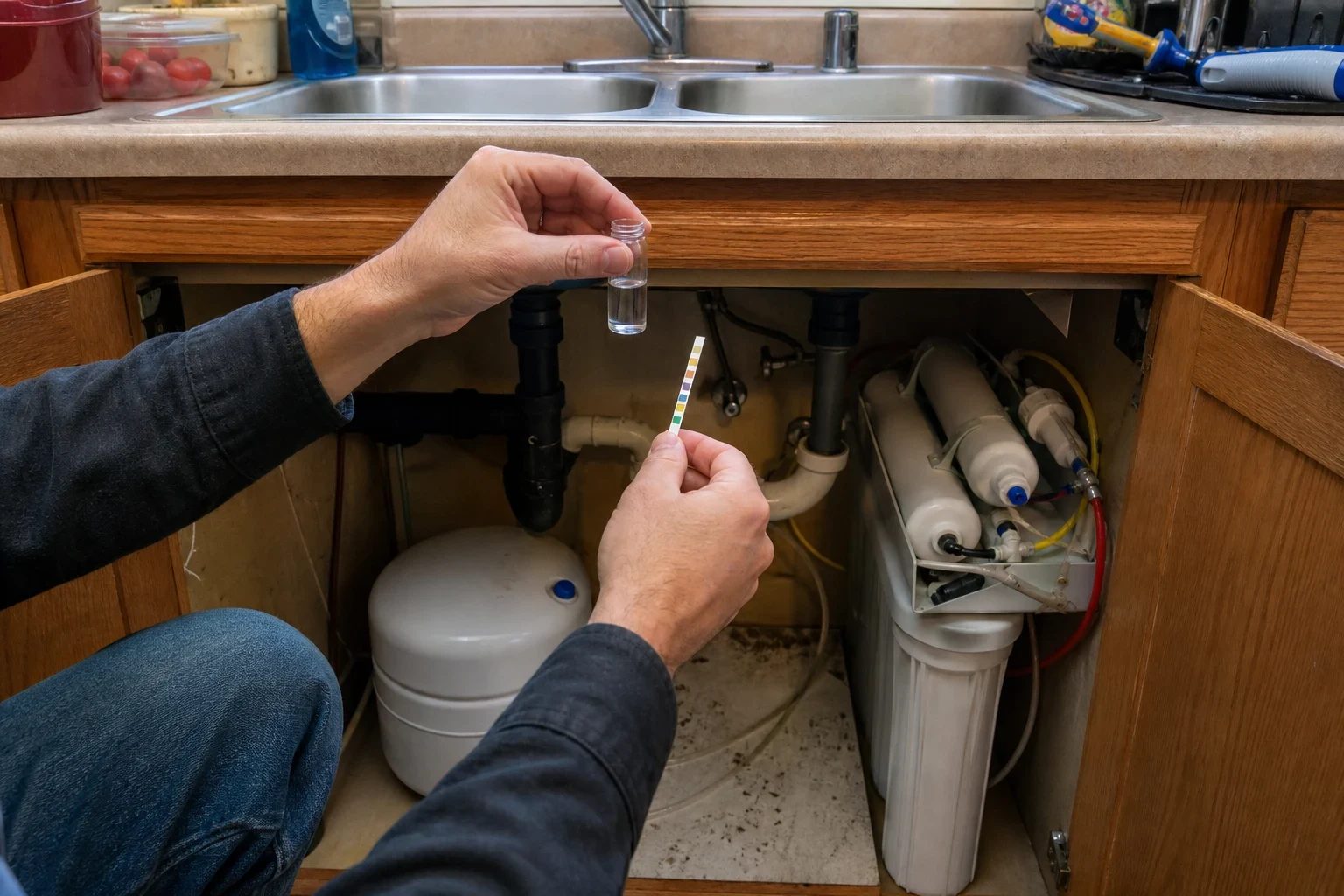
It starts with a phone call and a free water test with zero obligation. We measure hardness and note your plumbing layout, where the loop or main is, and where the drain can go.
- 2
Your options and installed pricing
We explain the grain capacity and valve we would use and why, and give you the installed price by phone. You can schedule it now or set it for a month that fits your budget.
- 3
Install day
Installs are done by our partner plumbers, and the water is off for part of the visit. They set the resin and brine tanks, cut in the bypass, run the drain line with its air gap, then pressure-check every joint for leaks.
- 4
Startup and follow-up
After the first regeneration we test the treated water and adjust the valve settings if needed. Installation and labor carry a 5-year warranty.
What Moves the Price of a Softener
The installation is included with the system, so your quote covers the equipment and the plumbing work together. The price moves with a few specific choices and with what we find at your home. We walk through each one after the test so you can plan the cost instead of reacting to a failed appliance.
- Grain capacity
- Higher hardness and bigger households need more resin. Larger tanks cost more up front but regenerate less often.
- Your plumbing access
- If your home already has a pre-plumbed softener loop, the tie-in is short and simple. Cutting a new connection into the main or running the drain line a long distance takes more labor and more fittings.
- Valve type
- A metered, demand-initiated valve costs more than a basic timer but saves salt and water every month it runs.
- Add-ons you choose
- Some homes pair the softener with a carbon pre-filter or an under-sink reverse osmosis system for drinking water. Each adds to the total.
- Salt or potassium
- Potassium chloride costs more per bag than sodium chloride. It is an ongoing cost worth budgeting before you decide.
Water Softener Questions
Something not covered here? (480) 808-5114
Do I need a softener or whole-home filtration?
They solve different problems. A softener removes hardness minerals that cause scale. Whole-Home Filtration uses carbon to reduce chlorine taste and odor. Your test results show which one, or both, makes sense for your home.
Will softened water taste salty?
The ion exchange adds some sodium, and the harder your water starts out, the more gets swapped in. Most people never notice it in the glass. If you want drinking water without that added sodium, an under-sink reverse osmosis system at the kitchen tap takes it back out.
How much upkeep does a softener need?
Mostly adding salt. Check the brine tank about once a month and keep it at least a third full. Break up any hard crust you find, since a salt bridge stops the brine from forming.
Can you replace my old softener in the same spot?
Usually, yes. If your existing loop, bypass and drain are in good shape, we reuse them, which keeps the work simpler. If the fittings are corroded or the drain lacks an air gap, we correct that as part of the install.
What warranty comes with the install?
Your installation and labor are covered by a 5-year warranty. After startup we test the softened water at a tap so you can see the hardness reading drop, and we note the valve settings in case you ever need service.
Plan Your Softener Before the Scale Does the Planning
Start with a free test, then get the installed price and pick a date that fits your budget. You can read our 3 five-star Google reviews before you decide.