ServicesWater Testing
Glendale Water Testing That Gives You Numbers to Plan With
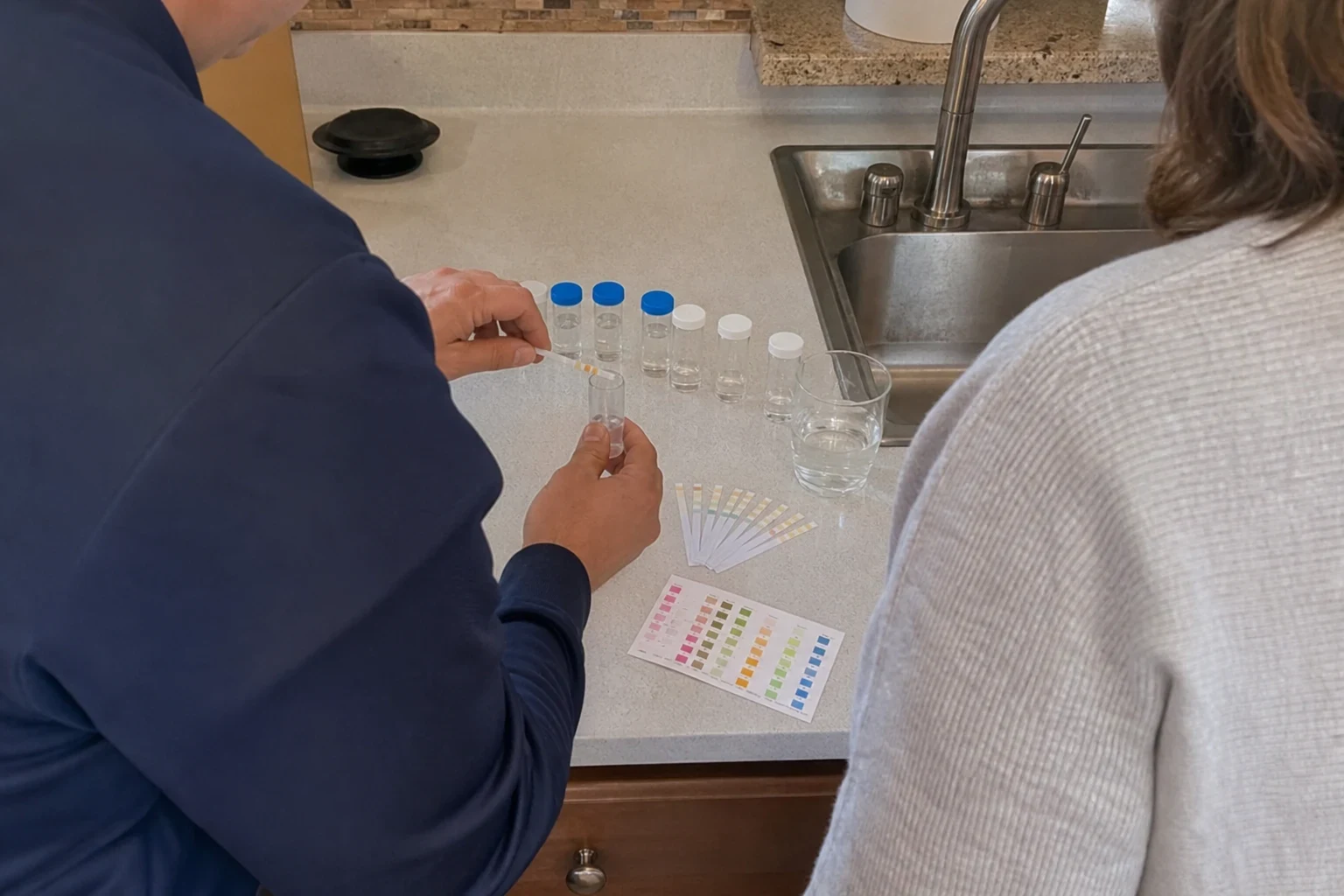
Our free water test measures hardness, dissolved solids, chlorine and pH at your kitchen tap, then we walk you through what each number means. You get a clear picture of your water and time to budget for the right system, with zero obligation to buy.
What a Water Test Tells You, and Why It Comes First
Most water complaints in your home trace back to a few measurable things: calcium and magnesium that leave white crust on fixtures, chlorine you can taste, or a high level of total dissolved solids that makes ice cubes cloudy. A test puts a number on each one, so the fix matches the cause instead of a guess.
Hard water is common across Glendale and the surrounding Valley, but readings shift with supply source and season, and your own plumbing and any existing equipment change what reaches the tap. That is why we test your water rather than quoting from a city average. With real numbers in hand, you can choose a water softener, whole-home filtration or reverse osmosis now, or plan it for next year, before scale shortens the life of your water heater.
The test is free. If you buy nothing, you still keep the results.
What We Check During the Test
Hardness in grains per gallon
We run a titration test that reports calcium and magnesium hardness in grains per gallon. That figure decides whether a softener makes sense and, if it does, how much resin capacity your household's daily water use calls for.
Total dissolved solids
A handheld TDS meter reads the total mineral and salt load in parts per million. A high TDS reading is the main reason people add a reverse osmosis system for drinking and cooking water.
Chlorine or chloramine
We test free and total chlorine with DPD reagent. The gap between the two tells us whether your supply carries chloramine. That matters because standard carbon removes chlorine well, while chloramine needs catalytic carbon.
pH and iron
pH affects how aggressive water is on copper lines and how well some filter media perform. A quick iron check separates rust staining from ordinary hardness scale.
A look at your existing plumbing
We note your water heater's age, where the main shutoff sits and whether there is a pre-plumbed softener loop. Those details shape what an install would involve later.
Written results
You keep a written copy of every reading, with a plain explanation beside each number.
Signs It's Time to Test Your Water
White buildup on fixtures
Calcium carbonate stays behind every time a drop of hard water dries on a faucet or shower head. When it collects where you can see it, the same mineral is coating the inside of your water heater and dishwasher.
Spotty glasses after the dishwasher
Hardness minerals and dissolved solids dry into a film on glass. A test shows whether softening, reverse osmosis for drinking water, or both would clear it up.
A pool smell at the tap
That odor is disinfectant residual. Knowing whether it is chlorine or chloramine decides which carbon media will actually remove it.
A rumbling water heater
Scale and sediment settle at the bottom of a tank heater and crackle as the burner heats through them. The layer insulates the water from the flame, so the heater runs longer to do the same job.
A water heater or kitchen project coming up
If you are replacing a water heater or redoing a kitchen, testing first lets you plan treatment into the same project instead of scheduling a second plumbing visit.
An older system you're unsure about
A softener or filter that has gone years without service may be letting hard water through. Readings before and after the unit show whether it still works.
How the Free Water Test Works
- 1
Book the visit by phone
Describe what bothers you about your water, whether it's taste, spotting or crusty fixtures, and we'll find a visit time that works around your schedule. The test happens in your home.
- 2
Sample the right taps
Our main sample comes off the cold side at your kitchen sink. When a softener or filter is already in place, we also pull water upstream of it for comparison. We let the line flush first so water that stood overnight doesn't skew the reading.
- 3
Read the results with you
Each test is done at your counter so you can watch the numbers come up. We explain what is normal and what is high as we go.
- 4
Lay out options and a timeline
We explain which system, if any, fits the results and give you installed system pricing. You can schedule now, set a target date months out, or simply keep the numbers. If you go ahead, the installation and labor carry a 5-year warranty.
What the Test Costs and What Moves a System Price
The water test is free with zero obligation, and install is included with the water treatment systems we offer. What a system costs depends on your results and how your home is plumbed. Here is what moves that number, so you can budget before you decide.
- Grains per gallon and daily use
- The harder the water and the more your family runs through the taps each day, the more capacity a softener needs between regenerations. That points to a bigger resin tank with a control valve to match.
- How many problems need treating
- Some homes need softening alone. Chlorine taste plus high TDS can mean a softener with whole-home carbon and a reverse osmosis unit at the kitchen sink.
- Plumbing access
- A pre-plumbed softener loop in the garage keeps the install simple. Without one, the plumber cuts into the main line and adds a bypass valve and a drain connection.
- Filter media and upkeep
- Catalytic carbon for chloramine costs more than standard carbon. RO membranes and prefilters also have their own replacement schedule worth budgeting for.
Common Questions About the Water Test
Something not covered here? (480) 808-5114
Is there a charge for the water test?
None. The visit is free, and you owe us nothing once it's done. You keep the written readings, and we only recommend equipment your results actually point to.
Isn't the city's annual water report enough?
That report averages the entire utility system. What comes out of your faucet depends on where your supply enters, the pipes in your walls and any equipment already installed. We size systems from a reading taken at your own sink.
Does the free test include lead?
The in-home test measures hardness, TDS, chlorine, pH and iron. A trustworthy lead number requires a lab. If you have older plumbing or simply want to know, we'll tell you how to set up a lab analysis and how a reverse osmosis unit lowers lead at the drinking faucet.
Does every Glendale home need a softener?
Many do, but not every one. We'd rather put your grains per gallon in front of you than guess. When hardness is moderate and taste is the real complaint, carbon filtration or reverse osmosis may make more sense to start with.
Who handles the install after the test?
Licensed and insured partner plumbers do every install. They follow the readings and plumbing notes taken during your test visit, so what goes into your home fits what we measured. Our 5-year warranty covers the installation and labor.
Know Your Numbers Before You Spend
A free test now gives you time to plan and budget for the right system instead of reacting when a water heater fails. We've earned 3 five-star Google reviews so far, and we'd like yours to be next.